
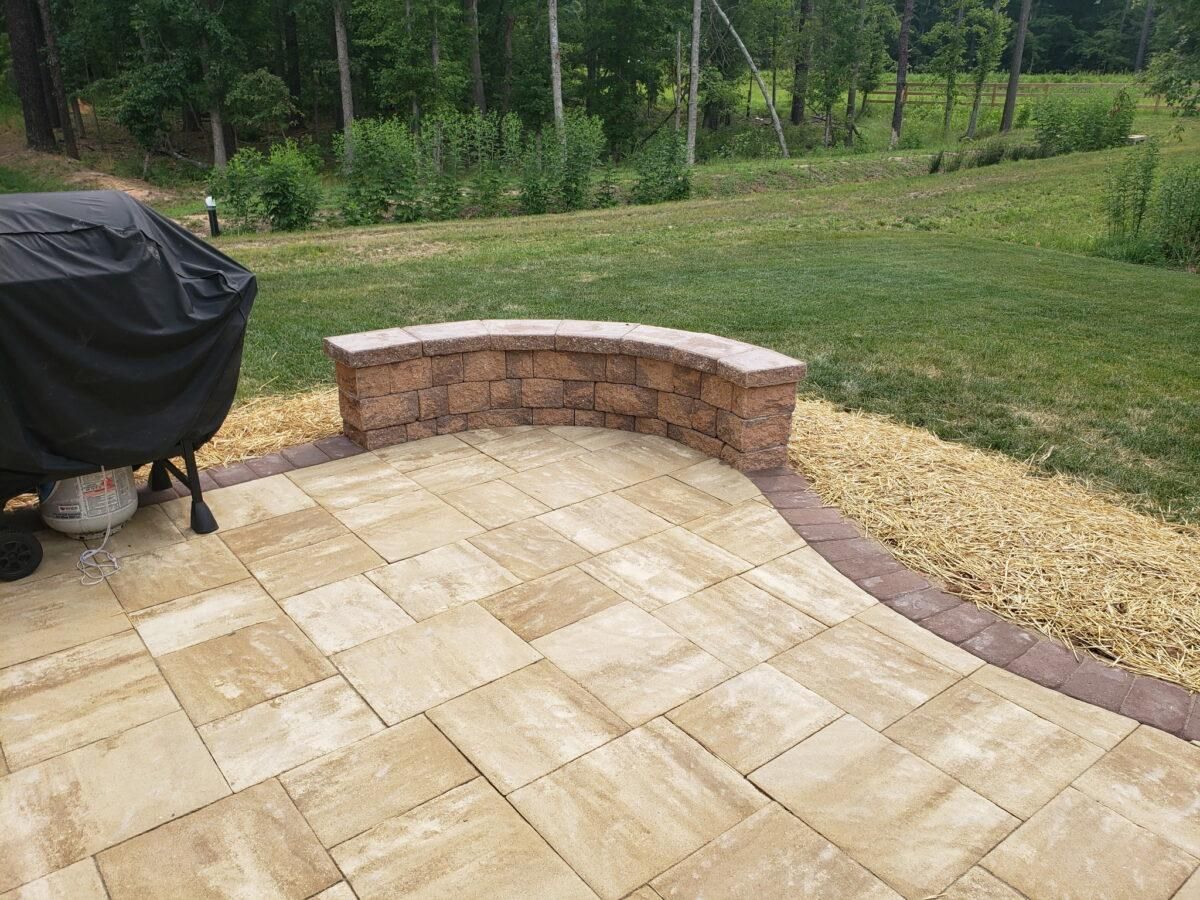
Surfaces That Stop Sinking and Shifting
Interlocking Brick Pavers in Essex for properties where settling and uneven surfaces have already appeared
When existing walkways develop low spots that collect water or patio sections tilt toward the house instead of away from it, those are visible signs that the base beneath the surface has failed. Chesapeake Hardscapes and Exteriors removes ten to twelve inches of earth before any paver installation begins, which eliminates organic material and unstable soil that compresses unevenly under weight and weather cycles. Interlocking brick pavers in Essex, Northeast, Bel Air, Middletown, Aberdeen, and Fallston are installed over a layered base system that prevents the long-term sinking issues common in shallow or improperly prepared surfaces.
The installation process begins with excavation to the full depth, followed by fabric placement to separate soil from stone, then 57 stone for drainage and load distribution, then number 8 leveling stone for a smooth plane, and finally 2.25 inch pavers that lock together across the surface. Each layer serves a specific function in water management and load transfer, which is why the depth and material sequence matter more than the paver pattern you choose.
Arrange an on-site consultation to measure excavation requirements and review base specifications for your outdoor space or commercial area.
What Happens After Pavers Are Set
Once pavers are placed on the leveling stone, polymeric sand is swept into the joints and activated with water to bind the surface together. Vibration compacts the pavers into the base and tightens the joints, then additional polymeric sand is applied to fill any voids that open during compaction. This repeated joint filling process creates a surface where pavers resist shifting horizontally and shedding sand over time.
After completion, you'll notice that pavers remain level during rain because water drains through the base layers instead of pooling on top or eroding joint material. The interlocking design distributes weight across multiple units rather than concentrating stress on individual pavers, which is why you don't see cracking or corner breakage in properly installed systems even under vehicle traffic or freeze-thaw cycles in Maryland winters.
Residential patios, walkways, and outdoor spaces benefit from the same installation standards as commercial areas where higher traffic and load requirements apply. The base depth and material specifications remain consistent because the factors that cause failure—water accumulation, inadequate compaction, and insufficient load distribution—affect all paver surfaces regardless of project size.
Common Questions About Paver Installation
Homeowners and property managers often need to understand what separates paver systems that perform for decades from those that require repair within a few years.
Why does the installation require removing ten to twelve inches of earth?
That depth removes organic topsoil and unstable material, providing room for fabric, drainage stone, leveling stone, and pavers in a sequence that prevents compression and water retention that cause settling.
What is polymeric sand and why does it matter?
Polymeric sand contains binding agents that harden when activated with water, preventing joint material from washing out and stopping weeds from growing between pavers while allowing water to drain through the base.
How does vibration improve paver performance?
Vibration compacts pavers into the leveling stone and seats them evenly, eliminating voids that would allow individual units to rock or shift under foot traffic or weather pressure.
What prevents pavers from sinking in Essex's clay-heavy soils?
The layered stone base distributes weight across a wide area and drains water away before it can soften the soil beneath, which is the primary cause of sinking in areas with clay content that retains moisture.
How long does a properly installed paver system last?
Paver systems installed with full-depth base preparation and proper drainage perform for decades without requiring releveling or joint refilling, though individual pavers can be lifted and replaced if damage occurs without disturbing surrounding areas.
Chesapeake Hardscapes and Exteriors provides detailed estimates that specify excavation depth, base materials, paver thickness, and joint treatment for residential and commercial projects. Contact us at (443) 567-8060 to schedule a site review and discuss long-term performance requirements for your paver installation.